
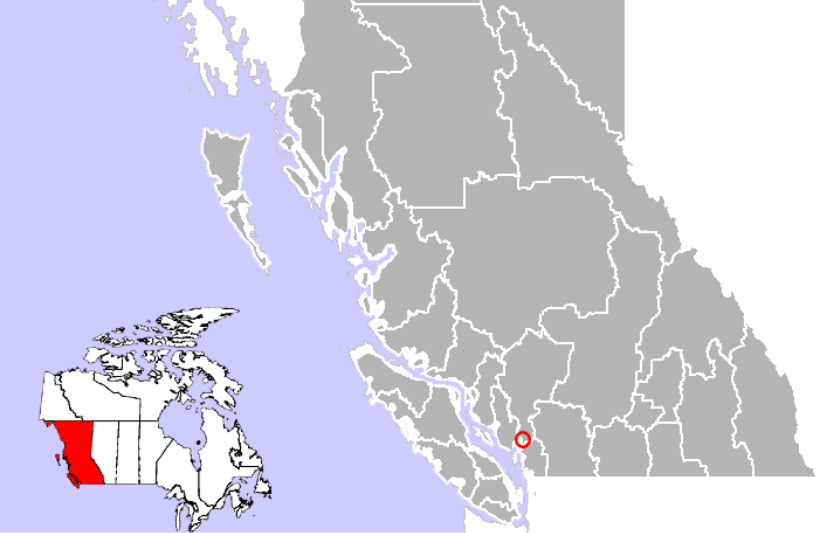
Britannia Beach is a small community on the eastern shore of Howe Sound, surrounded by the dramatic mountains and coastal landscapes of the Sea to Sky region. Although modest in size, the community has an unusually rich industrial history connected with one of the most significant historic copper mining operations in British Columbia. For visitors asking where is Britannia, the answer involves more than simply finding a point on a map. The community lies along the Sea to Sky corridor between Vancouver and Squamish, making it accessible to travellers exploring the coast while also providing a fascinating introduction to the region’s mining heritage.
Today, Britannia Beach combines its industrial past with the character of a modern coastal community. Historic structures remain visible against the mountains, while preserved mining infrastructure helps explain why a settlement developed in this particular location. The story of Britannia B and the surrounding area reflects the relationship between natural resources, transportation, engineering and community development that influenced many parts of the province during the twentieth century.
Where Is Britannia Beach Located?
Britannia Beach is situated beside Howe Sound along the Sea to Sky Highway, south of Squamish and north of the Greater Vancouver area. Its location places the community between steep mountain slopes and the coastal waters of the sound. This geography creates impressive scenery today, but historically it presented major challenges for transportation, construction and industrial development.
Anyone researching where is Britannia will quickly discover that geography is essential to understanding the community’s history. The surrounding mountains contained the copper-bearing mineral deposits that encouraged development, while access to Howe Sound provided an important transportation connection. Before modern highway travel became established, marine transportation played a much larger role in moving people, supplies and industrial materials between the settlement and other coastal communities.
Why a Community Developed Here
Britannia Beach did not originally grow because of tourism or suburban expansion. Its development was directly connected to mineral resources in the surrounding mountains. Copper deposits attracted prospectors and investors, eventually leading to the establishment of a substantial mining operation. Once industrial production expanded, a permanent workforce was needed to operate underground workings, maintain equipment and process extracted ore.
The isolated location meant workers and their families required housing and essential services near the mine. A community therefore developed around the industrial operation. Schools, shops and recreational facilities became part of everyday life, creating a settlement whose economic and social identity was closely tied to copper production. The historical development of Britannia B illustrates a pattern found in many resource communities, where a major industrial project became the foundation for permanent settlement.
The Copper Mining Era
Mining transformed the mountains surrounding Britannia Beach into a complex industrial environment. Underground tunnels provided access to mineral deposits, while systems for transporting ore connected different parts of the operation. At the surface, large processing facilities were required to separate valuable copper minerals from the surrounding rock.
One of the most prominent surviving structures from this period is Mill No. 3, the historic concentrator constructed on the mountainside. Its large stepped form reflects both the mineral-processing methods of its era and the steep terrain of the site. The building remains an important visual landmark and provides a sense of the scale on which mining once operated here.
The mine also influenced life far beyond the industrial buildings. Generations of workers and families formed a community in which employment, housing and social activities were interconnected. Understanding this human dimension is essential for appreciating why the mining era remains such an important part of local identity.
Geography and the Mining Industry
The location of the mineral deposits presented engineers with considerable challenges. The mountains rise sharply from Howe Sound, providing relatively little flat land for extensive industrial construction. Infrastructure therefore had to be adapted to the terrain. Tunnels, transportation systems and processing facilities were designed around the natural slopes and geological conditions.
At the same time, proximity to the coast offered important advantages. Marine transportation provided access to larger markets and communities at a time when overland routes were limited. This combination of mineral resources, mountainous terrain and coastal access explains much about the historical development of the settlement.
When considering where is Britannia in relation to other historic resource communities, its position is particularly distinctive. The close proximity of major industrial structures to both the mountains and Howe Sound makes the relationship between geography and industry unusually visible.
Life in the Historic Mining Community
Daily life in Britannia Beach was shaped by the demands of the mining industry. Underground miners worked in physically challenging environments, while mechanics, engineers, equipment operators and processing workers maintained the extensive industrial system above and below ground. Many employees lived close to their workplaces because regular travel from distant communities was impractical.
Families created social networks that helped transform the industrial settlement into a community. Schools and recreational activities became important parts of local life, while social events provided opportunities for residents to gather outside the workplace. The relative isolation of the area strengthened the importance of these local institutions.
This social history provides another perspective on Britannia B beyond the machinery and mineral deposits. Industrial heritage is ultimately about people as much as technology, and the experiences of residents reveal how mining influenced everyday life over several generations.
The End of Active Mining
Economic conditions surrounding resource extraction changed over time. Mining operations must constantly balance production costs, ore characteristics, infrastructure requirements and global metal prices. After decades of activity, the Britannia operation eventually closed in 1974, bringing an important period of local industrial history to an end.
Closure dramatically changed the community. The industry responsible for much of its original growth was no longer operating, while substantial industrial structures remained in the landscape. Some former mining communities disappear or lose much of their historical infrastructure after their primary industry closes. At Britannia Beach, however, significant elements of the industrial site survived and eventually became central to preserving and interpreting its history.
Discovering the Historic Mining Site
One of the principal historical attractions in the community today is the preserved former mining complex. Visitors can learn about the processes involved in copper extraction and mineral concentration while exploring aspects of the industrial environment where this work once occurred. The historic concentrator, mining equipment and underground experiences provide different perspectives on the scale and complexity of the former operation.
These attractions are particularly valuable because they connect historical information with physical surroundings. Seeing an industrial building positioned against the mountain makes it easier to understand the engineering challenges faced by earlier generations. Mining machinery provides a sense of the mechanical scale of production, while underground interpretation introduces visitors to working conditions that cannot be fully communicated through photographs alone.
Industrial Heritage and the Modern Landscape
Britannia Beach has changed significantly since the mining era, but the industrial past remains visible. Historic structures stand within a landscape now travelled by people heading through the Sea to Sky corridor for recreation, tourism and access to surrounding communities. This contrast between historical industry and contemporary travel gives the area a distinctive identity.
The transformation also demonstrates how industrial heritage can acquire a new purpose. Buildings originally designed for mineral processing can become educational resources, while former work sites can preserve stories about engineering, labour and community development. Instead of being separated from the modern settlement, the mining past has become part of the way the area is understood and presented to visitors.
Environmental Legacy and Recovery
The history of mining in the area also includes environmental impacts. Historical mining practices operated under standards that differed considerably from modern expectations, and old underground workings could continue influencing water quality after production stopped. Water interacting with exposed mineralized rock created environmental challenges that required substantial attention.
Remediation and water management consequently became another important chapter in the history of the site. Modern engineering has focused on controlling and treating contaminated mine water, demonstrating how responsibility for an industrial landscape can continue long after its original economic purpose ends. This environmental story adds valuable context for visitors interested in understanding both the benefits and long-term consequences of resource development.
Places and Experiences Worth Discovering
The historic mining complex is the most obvious destination for people interested in the area’s industrial heritage, but the surrounding landscape is equally important to understanding the community. Howe Sound, the mountain slopes and the transportation corridor all influenced how Britannia Beach developed. Observing these geographical features helps visitors understand why engineers made particular decisions about buildings, tunnels and transportation systems.
Travellers can also use the community as a historical stop while exploring the broader Sea to Sky region. Squamish and other nearby destinations provide additional perspectives on the development of transportation, resource industries and settlement along the corridor. Before visiting individual attractions, travellers should check current opening hours, admission information and access conditions directly with the relevant operators.
Why Britannia Beach Is Historically Important
For anyone wondering where is Britannia and why the community appears so frequently in discussions of mining history, its significance comes from the unusually strong connection between place and industry. Copper resources encouraged the establishment of a major operation, geography influenced its engineering, and the need for workers led to the growth of a distinctive community. When mining ended, surviving structures allowed this industrial story to remain visible.
Today, Britannia B represents more than a former resource settlement. It provides a tangible connection with an important period of industrial development and demonstrates how communities can adapt after the industries that created them disappear. The combination of coastal geography, preserved mining heritage and community history makes Britannia Beach an informative destination for anyone interested in understanding how natural resources helped shape the Sea to Sky region.