
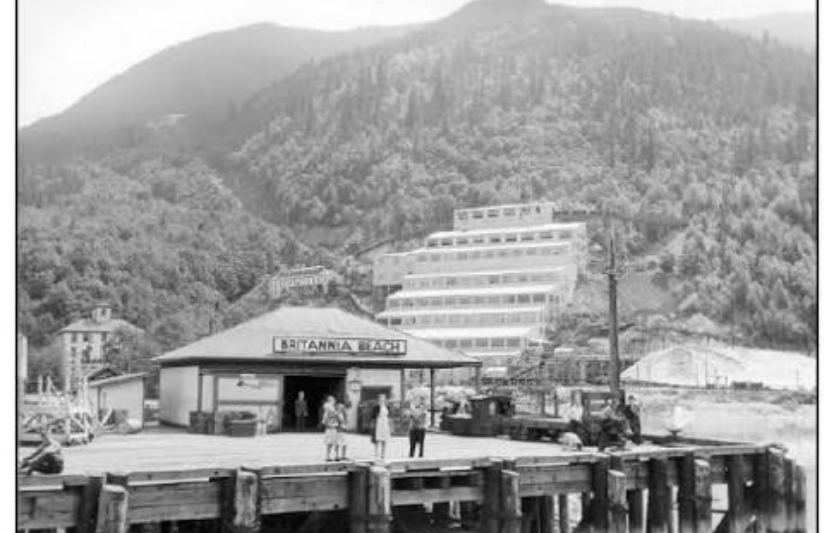
The story of Britannia Mine is closely connected with the industrial development of British Columbia during the twentieth century. Located along the mountainous coastline of Howe Sound, the former mining complex became one of the best-known copper-producing sites in the region. Its isolated location, challenging terrain and large-scale industrial infrastructure made the operation particularly distinctive. Today, Britannia Mine history provides an opportunity to understand not only how copper was extracted and processed, but also how mining influenced local communities, transportation networks, engineering practices and the broader economy. The surviving structures and preserved industrial landscape offer a physical connection to an era when resource extraction played a major role in the development of communities throughout the province.
The Early Development of Britannia Mine
The origins of Britannia Mine can be traced to the discovery of mineral deposits in the mountains above Howe Sound near the end of the nineteenth century. Developing those deposits into a productive mining operation was a difficult undertaking. The steep slopes, heavy rainfall and relative isolation of the area created significant logistical challenges. Equipment, construction materials, workers and supplies had to be transported to a location with limited access, while infrastructure had to be built to support both mining activities and a permanent workforce. These challenges shaped the early Britannia history and encouraged the development of an industrial community closely connected with the mine itself.
As exploration continued and the scale of the mineral deposits became clearer, investment in the site increased. Underground workings expanded into the mountains, while processing facilities were developed closer to the shoreline. Over time, Britannia Mine evolved from a remote mineral prospect into an integrated industrial operation. Tunnels, transportation systems, power infrastructure and processing facilities worked together as parts of a much larger production network. The growth of the operation illustrates how mining companies of the period combined geology, engineering and transportation technology to exploit mineral resources in difficult environments.
Copper Production and Industrial Expansion
Copper production became the central activity that defined the mine for decades. Ore extracted from underground workings contained valuable copper minerals mixed with large quantities of surrounding rock. This meant that the material had to pass through several stages of crushing, grinding and concentration before the valuable mineral content could be separated effectively. As production increased, the processing facilities became larger and more sophisticated, allowing the operation to handle substantial quantities of ore. Understanding this production system is an essential part of Britannia Mine history because it demonstrates the industrial scale required to transform underground mineral deposits into a commercially useful product.
One of the most recognizable surviving elements of the complex is the large concentrator building known as Mill No. 3. Built into the steep mountainside, the structure used gravity as part of the processing sequence, with material moving through different levels of the facility. Its design reflected both the geography of the site and the technological requirements of mineral concentration. For visitors and researchers interested in Britannia history, the building remains a powerful example of early twentieth-century industrial engineering and the way architecture could be adapted to demanding natural conditions.
Life in a Remote Mining Community
Britannia Mine was more than an industrial facility. The operation supported communities where miners, engineers, tradespeople and their families lived in close proximity to the workplace. Because transportation to larger population centres was limited, the mining settlements required their own housing and community services. Daily life was therefore closely connected with the rhythms of industrial production. Work schedules, transportation, local services and social activities were all influenced by the presence of the mine and the geographic isolation of the surrounding landscape.
The community dimension adds an important human perspective to Britannia Mine history. Mining operations depended on workers with different skills, from underground miners and equipment operators to mechanics, electricians and technical specialists. Their experiences reflected the opportunities and difficulties associated with industrial employment during this period. Working underground could involve physically demanding conditions and significant occupational risks, while living in a company-centred community created a distinctive social environment. The history of the site therefore extends beyond copper and machinery to include the experiences of generations of people whose lives were connected with the operation.
Engineering in a Challenging Landscape
The geography surrounding the mine influenced nearly every aspect of its development. Steep mountains rise directly from Howe Sound, leaving relatively little flat land for industrial construction. Engineers had to adapt buildings, tunnels and transportation systems to the terrain rather than impose a conventional industrial layout on the landscape. This relationship between geography and engineering is one of the most distinctive elements of Britannia history and helps explain the unusual appearance of the surviving industrial complex.
Underground development required extensive networks of tunnels and working areas that allowed miners to reach ore deposits inside the mountain. Once extracted, material had to be transported efficiently toward processing facilities. The operation also needed reliable energy, water management and mechanical systems to maintain production. Together, these components demonstrate the complexity of operating a large mine in an isolated coastal environment. Britannia Mine became an example of how industrial engineering could respond to difficult terrain while supporting production on a significant scale.
Decline and Closure of the Mining Operation
Like many major mining sites, Britannia Mine experienced changing economic and operational conditions over the course of its existence. Ore quality, production costs, global copper markets and the increasing expense of maintaining aging infrastructure all influenced the long-term viability of the operation. After decades of activity, mining eventually ceased in 1974. The closure marked the end of an important industrial era for the surrounding community and raised questions about what should happen to the extensive buildings, machinery and underground workings left behind.
The end of production did not mean the end of the site’s significance. Instead, attention gradually shifted from extracting resources to preserving industrial heritage. The surviving structures became historical evidence of mining technology, engineering and community life. This transition represents an important chapter in Britannia Mine history because it illustrates how a former industrial workplace can acquire a new role as a place of education, interpretation and heritage conservation.
From Former Mine to Historic Landmark
Preserving a former industrial complex presents challenges that are very different from maintaining a traditional historic building. Large mining structures were designed for production rather than long-term public access, and many contain specialized equipment or were constructed in demanding environments. Conservation efforts therefore require an understanding of both historical significance and industrial engineering. At Britannia, preservation has helped maintain key elements of the site while allowing visitors to explore the broader story of mining and mineral processing.
The transformation of Britannia Mine into a historic landmark has made the site an important resource for interpreting the industrial past of British Columbia. Instead of allowing the mining complex to disappear completely after closure, preservation efforts have retained visible evidence of the technologies and infrastructure that supported copper production. Mill buildings, machinery, underground spaces and other surviving features help communicate the scale of the former operation in ways that written records alone cannot achieve.
Environmental Legacy and Changing Perspectives on Mining
The legacy of historical mining also includes environmental consequences. Earlier industrial operations were developed under standards and expectations that differed substantially from modern environmental practices. Water moving through old underground workings and mineralized rock can interact with exposed materials and create long-term environmental management challenges. The history of Britannia Mine therefore provides a useful case study for understanding how the effects of resource extraction can continue long after commercial production has ended.
Modern interpretation of the site can place industrial achievement alongside environmental responsibility rather than treating them as separate subjects. This broader approach makes Britannia history particularly relevant today. It demonstrates how society’s understanding of mining has changed over time, with greater attention now given to remediation, water quality, land management and the long-term responsibilities associated with resource development. Examining both the economic importance and environmental legacy of the mine provides a more complete understanding of its place in Canadian industrial history.
Preserving British Columbia’s Industrial Heritage
Industrial heritage sites preserve forms of history that can easily disappear when factories, mines and processing facilities close. Machinery may be removed, buildings demolished and landscapes redeveloped, leaving few physical traces of industries that once supported entire communities. Britannia Mine is significant because major elements of its industrial landscape have survived and can be interpreted for future generations. These structures provide evidence of how people worked, how ore was processed and how engineering solutions evolved in response to practical challenges.
Preserving the site also helps connect local history with larger themes in Canadian economic development. Mining contributed resources, employment and infrastructure to many parts of the country, while also shaping patterns of settlement and technological innovation. The story of Britannia Mine shows these processes at a human and regional scale. Its transformation from an active copper operation into a protected heritage destination demonstrates how former industrial sites can continue to contribute to society through education, historical research and cultural preservation.
Why Britannia Mine History Still Matters
Britannia Mine represents more than the remains of a former copper operation. Its buildings, underground workings and surrounding landscape document decades of technological development, industrial labour and community life. Studying Britannia Mine history helps explain how resource industries contributed to the growth of British Columbia while revealing the engineering challenges involved in operating a major industrial complex in a remote mountainous environment.
At the same time, the preserved site encourages a broader discussion about the relationship between industry, communities and the environment. The transition from working mine to historic landmark shows how industrial places can acquire new meaning after their original purpose has ended. By preserving physical evidence and interpreting Britannia history for new generations, the site provides a valuable link between the province’s resource-based past and contemporary discussions about heritage, technology and responsible resource development.