
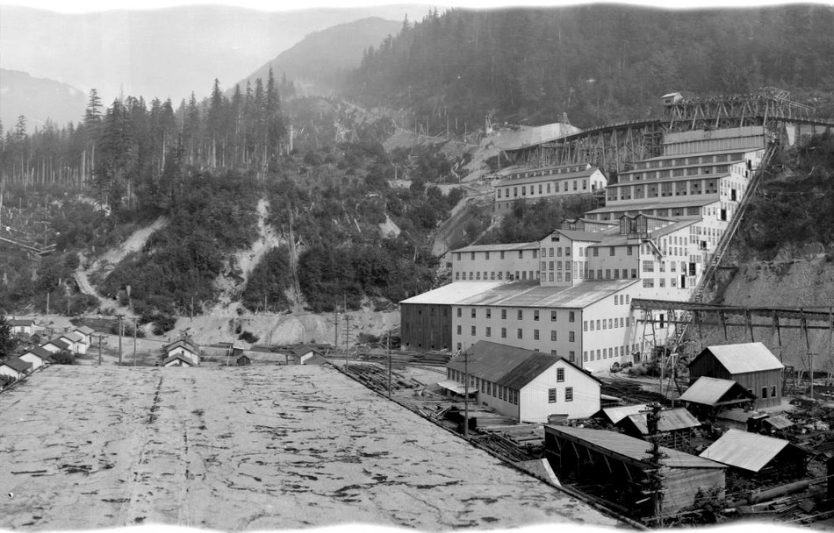
Britannia Creek is closely connected with the industrial history of the mining community that developed along Howe Sound. The surrounding mountains contain mineral deposits that encouraged extensive copper mining, bringing workers, machinery and infrastructure into an environment that had previously been shaped primarily by natural geological and hydrological processes. As mining expanded, the relationship between the creek, the mountains and the nearby settlement changed considerably. Industrial buildings, underground workings, transportation systems and areas used for processing mineral material became part of the landscape, creating a lasting physical record of resource extraction.
The story of Britannia BC is therefore not limited to the history of a mine or the people who worked there. It also demonstrates how a major industrial operation can influence terrain and waterways for decades after production ends. Understanding these changes provides useful insight into both the achievements and environmental consequences of historical mining, while showing how modern remediation can become another important chapter in the evolution of a former industrial landscape.
Britannia Creek Before Large-Scale Mining
The natural setting around Britannia Creek is defined by the steep coastal mountains that rise from Howe Sound. Water flows from higher elevations through narrow valleys toward the coast, carrying sediment and interacting with mineralized rock along the way. The combination of steep terrain, substantial precipitation and complex geology created a dynamic landscape long before industrial development began.
The same geological processes that shaped the mountains also created the mineral resources that later attracted prospectors. Copper-bearing deposits provided the economic incentive for extensive exploration and eventually for the construction of a major mining operation. Once those resources became commercially valuable, the creek and surrounding terrain became part of an industrial system in which natural features had to coexist with tunnels, buildings, roads and other infrastructure.
The Arrival of Mining and Industrial Development
Large-scale mining required extensive changes to the surrounding environment. Underground tunnels were driven into the mountains to reach mineral deposits, while waste rock and extracted ore had to be transported through the site. Processing facilities were constructed to concentrate valuable minerals, and additional infrastructure was required to provide power, move materials and support a growing workforce.
Britannia Creek occupied an important position within this changing landscape. Water management was essential because mining and processing facilities operated in an area characterized by steep slopes and significant runoff. Industrial development therefore altered not only the appearance of the valley but also the ways in which people interacted with local water systems. The resulting landscape reflected a combination of natural geography and engineering decisions made to support copper production.
Underground Workings and the Mountain Landscape
Much of the physical transformation associated with mining occurred out of sight. Extensive underground workings created a network of tunnels and other excavated spaces inside the mountains. These structures allowed miners to reach ore deposits and move material through different parts of the operation, but they also changed the way water could travel through mineralized rock.
When water enters old mine workings, it can interact with exposed minerals that were previously protected within the mountain. This interaction can produce chemically altered drainage containing dissolved metals. The phenomenon became particularly important after mining ended, when maintaining the extensive underground system was no longer part of active production. The environmental history of Britannia Creek consequently became closely connected with the underground legacy of the former mine.
Ore Processing and Changes on the Surface
Surface facilities also transformed the landscape. Copper ore extracted from the mountain contained valuable minerals mixed with large quantities of other material. Processing required crushing, grinding and concentration, which meant constructing substantial industrial facilities capable of handling large volumes of rock.
These activities created a landscape very different from the original mountain valley. Buildings, machinery, transportation routes and areas associated with mineral processing became prominent features. Historical references to locations such as Britannia & Mill Creek can reflect the close relationship between local waterways and the industrial geography that developed around mining. Understanding that relationship helps explain why water management became so important both during the operating period and after closure.
Water and the Environmental Legacy of Mining
Water is one of the most important elements in understanding the environmental history of the former mining area. Rain and mountain runoff can enter underground workings, where the water comes into contact with exposed mineralized surfaces. Chemical reactions can increase acidity and mobilize metals, producing what is commonly known as acid mine drainage.
For Britannia Creek, the consequences of historic mining demonstrated how environmental effects can continue long after mineral extraction stops. Water does not recognize the boundaries of an abandoned industrial site, and contaminants can move downstream toward larger aquatic environments. This made the management of mine drainage a significant long-term issue and highlighted the importance of considering entire watersheds when evaluating the environmental legacy of resource extraction.
How Mining Affected Aquatic Habitat
Changes in water chemistry can have serious consequences for aquatic ecosystems. Elevated concentrations of dissolved metals and acidic conditions can make waterways unsuitable for many forms of aquatic life. Fish and smaller organisms are particularly dependent on appropriate water quality, making streams useful indicators of environmental conditions within a watershed.
The experience of Britannia Creek became an example of the long-term relationship between historical industrial activity and aquatic habitat. The effects were not simply visual changes to the landscape. They involved chemical processes occurring in water and rock, demonstrating that some of the most important environmental impacts of mining can continue underground and downstream even after machinery has stopped operating.
Mine Closure and a New Environmental Challenge
The closure of the Britannia mining operation in 1974 ended commercial extraction but did not eliminate the environmental processes associated with the site. Underground workings, exposed mineral surfaces and historical industrial areas remained part of the landscape. Without active mining infrastructure operating in the same way as before, contaminated drainage became a major issue requiring long-term management.
This period changed how the former industrial site was understood. Britannia BC was no longer simply associated with the economic achievements of copper production. Increasing attention was directed toward environmental responsibility, historical contamination and the question of how former mines should be managed after closure. These concerns reflected a broader change in attitudes toward industrial development and environmental protection.
Remediation and Water Treatment
Addressing the environmental legacy of a historic mine requires a combination of engineering, environmental science and long-term monitoring. At the Britannia site, remediation efforts have focused on controlling contaminated mine water and reducing the movement of pollutants into the surrounding environment. Water treatment became a central component of this approach.
Treatment systems can remove or reduce contaminants before water reaches sensitive aquatic environments. Such projects represent a very different type of engineering from the systems originally designed to extract and process copper, but they are now an essential part of the site’s industrial story. The same landscape that once demonstrated the technological capabilities of large-scale mining now also illustrates the technical challenges involved in managing its environmental legacy.
Reading the Industrial Landscape Today
Visitors to the area can still observe evidence of the industrial period in the relationship between historic structures, transportation routes and the surrounding mountains. The landscape provides clues about where people worked, how materials moved and why particular locations were selected for industrial facilities. Looking at Britannia Creek within this broader setting helps transform the landscape itself into a historical record.
The term Britannia & Mill Creek also highlights how waterways can become important reference points when examining industrial geography. Creeks are not simply features on a map; they influence drainage, construction and environmental management. Their histories can reveal how industrial activity interacted with natural systems and how those interactions changed after production ceased.
From Industrial Impact to Environmental Recovery
The modern history of Britannia Creek is increasingly connected with remediation and environmental recovery. Improvements in water management demonstrate that landscapes affected by historical mining are not necessarily static. Engineering interventions, environmental monitoring and long-term management can reduce contamination and create better conditions for ecological recovery.
This transformation also changes the way the history of Britannia BC can be interpreted. The area represents several distinct periods: the natural landscape before intensive industrial development, the expansion of copper mining, the environmental challenges that became evident during and after the mining era, and the modern effort to manage those consequences. Each period has left evidence that contributes to a more complete understanding of the site.
Lessons From Britannia Creek
The history of Britannia Creek demonstrates why the environmental consequences of mining must be considered over very long periods. A mine can operate for decades, but changes to underground geology, water movement and surface landscapes may continue to influence the environment long after production ends. Modern mine planning therefore places considerably greater emphasis on closure strategies, water treatment and long-term environmental management.
At the same time, the area provides an important example of how historical industrial landscapes can become places of education. Preserved structures explain the technological and economic importance of mining, while the surrounding watershed demonstrates its environmental dimensions. Together, these elements create a more balanced understanding of resource development.
Britannia Creek remains an important part of this evolving story. Its history connects geology, copper mining, industrial engineering, environmental impact and remediation within a single landscape. By examining how the creek and surrounding environment changed over time, it becomes possible to understand both the scale of the industrial transformation and the continuing work required to manage the legacy left behind.