
The Sea to Sky corridor is known today for its mountains, coastal scenery and outdoor recreation, but its modern identity was also shaped by an important industrial past. Britannia Beach and Squamish developed within a region where geography, natural resources and transportation strongly influenced settlement. Copper mining at Britannia became one of the most significant industrial activities along Howe Sound, attracting workers, encouraging infrastructure development and creating a community closely connected to the mine. Squamish, meanwhile, developed as an important regional centre with strong transportation and resource-industry connections. Understanding the relationship between Britannia Beach Squamish and the surrounding corridor reveals a side of local history that extends far beyond the landscape visible today.
Although Britannia Beach and Squamish developed as distinct communities, their histories belong to a broader story of resource development along the coast and in the mountains of British Columbia. Mining, forestry, transportation and related industries created employment while encouraging people to establish permanent communities in locations that had previously been difficult to access. The former mining complex at Britannia remains one of the most visible reminders of this industrial era and provides an important reference point for understanding how economic activity transformed the Sea to Sky region.
The Origins of Mining at Britannia Beach
The mining history of Britannia Beach began with the identification of valuable mineral deposits in the mountains above Howe Sound near the end of the nineteenth century. Copper attracted particular interest because demand for the metal was increasing as electrical infrastructure and industrial manufacturing expanded. However, discovering ore was only the first step. Developing a productive mine in steep coastal mountains required substantial investment in engineering, transportation and processing facilities.
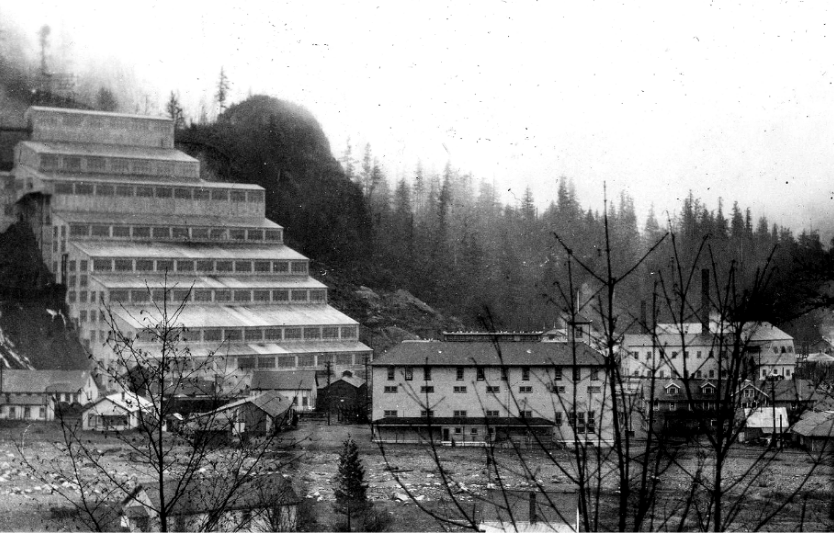
As the operation expanded, underground workings reached deeper into the mountains and industrial infrastructure grew near the shoreline. The site eventually developed into a large integrated mining complex capable of extracting and concentrating significant quantities of copper-bearing ore. The history sometimes associated with the term Britannia Mine Squamish reflects the mine’s close regional connection with Squamish and the Sea to Sky corridor, although the historic operation itself was centred at Britannia Beach rather than in the town of Squamish.
Britannia Beach as an Industrial Community
A major mining operation required a permanent workforce, and that workforce needed somewhere to live. Britannia Beach consequently developed into a community where employment and everyday life were closely connected. Miners, engineers, mechanics, processing workers and other employees lived near the industrial facilities, often together with their families. Housing and community services were established to support a population living in a relatively isolated location.
The mine influenced almost every aspect of local life. Work schedules shaped daily routines, while transportation connections determined how residents could reach other communities. Schools, recreational facilities and social activities helped create a sense of community beyond the workplace. The Britannia Beach Squamish area therefore offers a valuable example of how industrial employment could influence both settlement patterns and social relationships within resource-based communities.
Squamish and the Regional Resource Economy
Squamish developed under somewhat different circumstances but shared many connections with the broader resource economy. Its strategic location at the head of Howe Sound gave the community an important role in regional transportation and industrial activity. Forestry became especially significant, while rail, marine and later road connections strengthened Squamish as a link between the coast and the interior.
Mining activity in the surrounding region formed part of this larger economic landscape. Although references to a Squamish mine can suggest a single defining operation within the town, the historical picture is more complex. Mining projects and mineral exploration occurred throughout the wider region, while Britannia Beach became the location of the best-known major copper operation along this section of Howe Sound. Squamish functioned within the same network of transportation, labour and resource development that shaped neighbouring communities.
Geography and the Development of Industry
The physical landscape had an enormous influence on the development of both communities. Howe Sound is surrounded by steep mountains that provided valuable natural resources but created significant obstacles for transportation and construction. Industrial operations had to adapt to narrow coastal areas, steep slopes, waterways and difficult weather conditions. This required engineering solutions designed specifically for the local environment.
At Britannia, the mountains contained the mineral resources that made the mining operation possible, but they also complicated access to those resources. Tunnels, transportation systems and processing facilities had to function within a challenging landscape. Squamish faced its own geographic conditions as an industrial and transportation centre positioned between mountains, rivers and the coast. In both places, geography influenced where people lived, how materials moved and how infrastructure developed.
Transportation Along Howe Sound
Before modern highway connections transformed travel through the Sea to Sky corridor, water transportation was essential. Howe Sound provided an important route for moving people, equipment, supplies and industrial products. Coastal access helped make the development of Britannia possible despite the difficult mountainous terrain surrounding the operation.
The improvement of transportation networks gradually changed the relationship between communities. Better road access reduced isolation and made travel between Britannia Beach, Squamish and other parts of the region easier. These changes influenced local economies and lifestyles, particularly as traditional resource industries declined or transformed. What had once been a collection of relatively specialized industrial communities became increasingly connected through a shared transportation corridor.
Technology Behind the Britannia Mining Operation
The former copper operation was a complex industrial system rather than simply a collection of underground tunnels. Ore had to be extracted, transported and processed before valuable minerals could be shipped elsewhere. This required extensive mechanical equipment and carefully designed processing facilities capable of handling large quantities of material.
One of the most prominent elements of the historic complex was the concentrator known as Mill No. 3. Constructed on the mountainside, it became a defining feature of the industrial landscape. Its design made practical use of the steep terrain as ore moved through different stages of processing. The surviving structure remains an important reminder of the scale and engineering sophistication associated with what is sometimes described regionally as the Britannia Mine Squamish heritage.
Workers and Community Life
Industrial history is ultimately inseparable from the people who worked within these systems. Mining required underground workers as well as electricians, mechanics, engineers, equipment operators and processing specialists. The mine depended on coordinated labour across many different occupations, and changes in technology required workers to develop new skills throughout the operation’s history.
Life outside the workplace was equally important. Families established homes, children attended school and residents participated in social and recreational activities. In an isolated mining settlement, community relationships could become particularly important because access to larger towns and cities was limited. Squamish provided another regional centre where resource industries supported employment and community development, creating shared experiences across the wider corridor even though individual industries and workplaces differed.
The Decline of Mining at Britannia
Economic conditions surrounding mining changed throughout the twentieth century. The profitability of an operation depended on ore characteristics, production costs, global metal prices and the expense of maintaining infrastructure. Eventually, the Britannia operation ceased production in 1974, bringing an end to decades of copper mining that had shaped the surrounding community.
Closure fundamentally changed Britannia Beach. The economic activity that had originally supported the settlement disappeared, while industrial structures remained as reminders of the past. The community had to develop a new identity that was no longer based primarily on active mining. Squamish also experienced economic transitions as traditional resource industries changed, demonstrating how communities throughout the region needed to adapt to new economic conditions.
Environmental Legacy and Remediation
Historic mining created environmental challenges that became more visible after production ended. Mining practices used during earlier periods operated under different standards from those expected today, and water interacting with old underground workings and mineralized rock could affect the surrounding environment. Addressing these issues became an important part of managing the former industrial site.
The environmental story adds another dimension to regional mining heritage. A historic Squamish mine or Britannia-area operation cannot be understood only in terms of the resources it produced or the employment it created. Modern historical interpretation also considers environmental impacts, remediation and the long-term responsibilities associated with industrial development. This broader perspective makes former mining areas useful places for examining how attitudes toward natural resources have changed over time.
Preserving the Mining Heritage of the Region
The preservation of important structures at Britannia has allowed the industrial history of the Sea to Sky corridor to remain visible. Large industrial buildings, machinery and underground spaces provide physical evidence of an era that could otherwise be difficult to imagine. Heritage interpretation can connect these structures with stories about engineering, geology, workers and community life.
Preservation is especially important in a region that has undergone substantial change. Modern visitors travelling between Vancouver and Squamish encounter a landscape increasingly associated with tourism and recreation. Historic mining structures provide a reminder that the same mountains and coastline once supported major industrial activities. They demonstrate how the economic meaning of a landscape can change dramatically from one generation to another.
From Industrial Corridor to Modern Sea to Sky Region
The modern Sea to Sky corridor is very different from the industrial landscape experienced by earlier residents. Improved transportation has made communities more accessible, while tourism, outdoor recreation and new forms of economic activity have become increasingly prominent. Squamish has expanded and diversified, and Britannia Beach has moved beyond its original function as a company-centred mining settlement.
Despite these changes, industrial history remains part of the region’s identity. The Britannia Beach Squamish connection illustrates how neighbouring communities can share a historical landscape even when they developed around different economic activities. Mining, forestry and transportation were all part of a broader resource economy that helped establish permanent communities along Howe Sound and connect the coast with areas farther inland.
Why the Region’s Mining Heritage Matters
Exploring the history of the Britannia Mine Squamish area provides a deeper understanding of how natural resources influenced settlement and industrial development. Copper mining brought workers and investment to Britannia Beach, while Squamish developed into an increasingly important transportation and resource centre. Together, their histories demonstrate how geography, industry and infrastructure interacted to shape the Sea to Sky region.
Today, the legacy of the former mine survives through preserved industrial structures, historical interpretation and the continuing identity of Britannia Beach. References to the broader Squamish mine heritage also encourage exploration of the diverse resource industries that operated throughout the surrounding mountains. By preserving these stories, the region maintains a connection between its industrial past and its modern identity, allowing residents and visitors to understand how dramatically the Sea to Sky corridor has evolved over more than a century.